woodworkin 98's pick · Updated October 2026
DEWALT 7-1/4 in. 24T Circular Saw Blade (DWA271424)
Loading photo
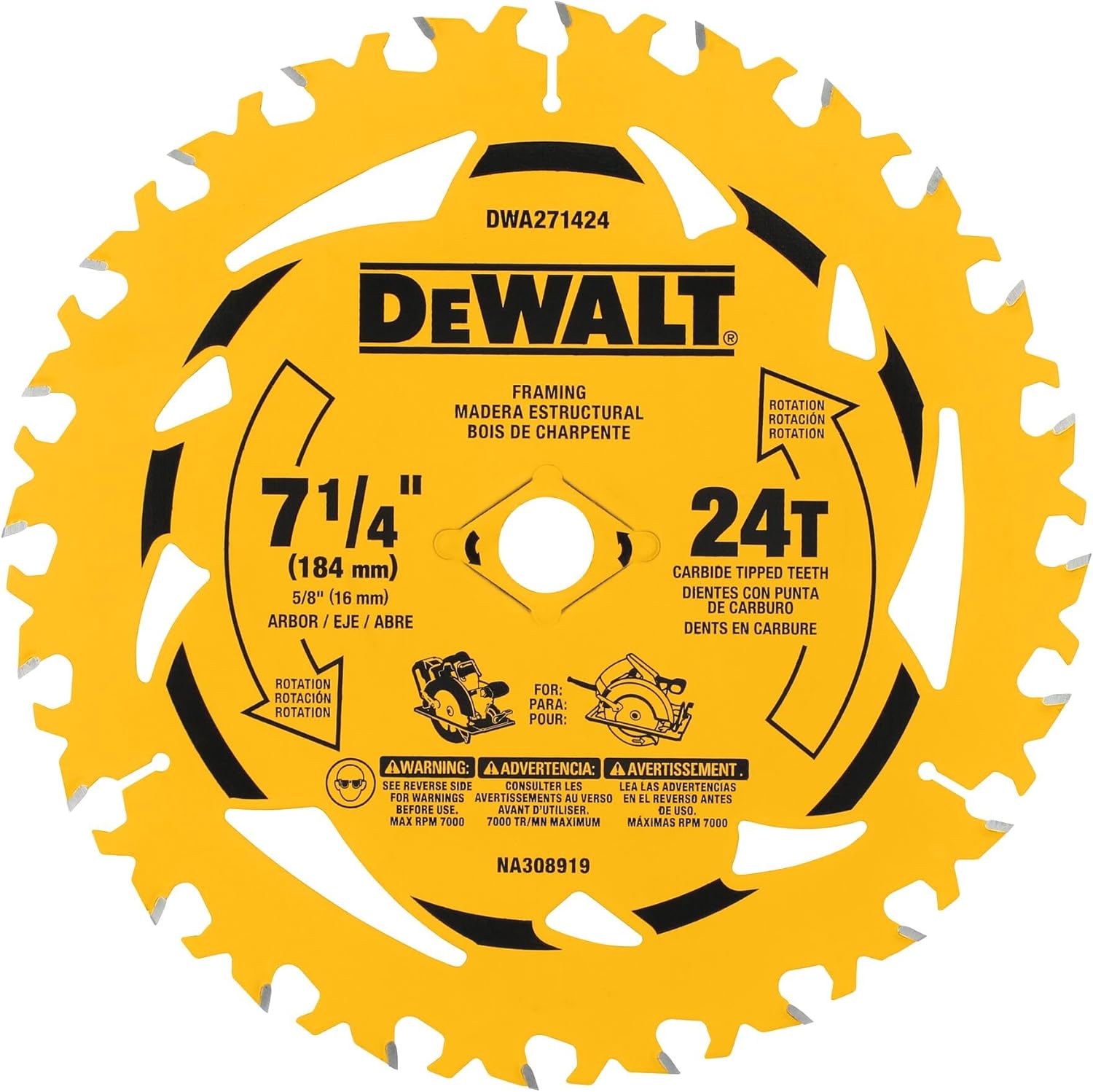
A 7-1/4 in. 24T circular saw blade is usually the kind of purchase that matters most to someone who cuts sheet goods, framing lumber, or trim and wants the cut to look clean enough to move straight to assembly. It can also suit a DIY builder who wants a general-purpose blade for a corded or cordless saw in this size range, especially if the goal is smoother crosscuts rather than fast, rough ripping. The title points to smooth cutting, superior tracking, and durability, so the main appeal here is not specialty performance but a practical balance of cut quality and day-to-day wear resistance.
That balance is worth paying attention to because blade choice changes the whole feel of a saw. A 24-tooth blade usually gives fewer teeth to push through the cut, which can be a good fit for faster work and general framing tasks, while also leaving more room for chip clearing than a higher-tooth finish blade. For a reader comparing blades, this is the kind of spec that tends to matter more than brand alone. The right choice depends on what gets cut most often, whether the saw is being used for rough carpentry or cleaner finish work, and how much edge quality matters at the cut line.
One thing to check before buying is whether 24 teeth is enough for the materials you care about. That tooth count may be a useful middle ground for many common jobs, but it is not the same thing as a fine-finish blade for visible trim, cabinetry, or delicate plywood work. Buyers should also confirm compatibility with their saw's arbor size, intended RPM range, and the kind of stock they cut most often. A blade that fits the saw but not the task can leave the user wishing they had chosen a different tooth count.
The evidence available here is limited to the listing itself, so this draft stays close to the stated features and the usual buying questions around blade selection. The product name suggests smooth cutting and better tracking, but those are claims to verify against the actual work a user plans to do. In practice, a blade like this is best judged by how it handles straight cuts, how much tear-out it leaves, and how often it stays in service before replacement becomes the better option.
This may fit someone who wants a general-purpose 7-1/4 in. blade for routine cutting and does not need a specialty finish blade for every job. It is also a reasonable page to start from if the site is building out a DEWALT collection and needs one clean, neutral entry that helps readers compare tooth count, cut quality, and intended use. For shoppers who know they want smoother cuts without moving into a very fine-tooth blade, this looks like a sensible place to begin research.
Amazon product links on this guide are not currently affiliate links. Neither woodworkin 98 nor Buyer Field Guide earns an affiliate commission from them.
See current price