woodworkin 98's pick · Updated October 2026
DEWALT Thickness Planer (DW735X)
Loading photo
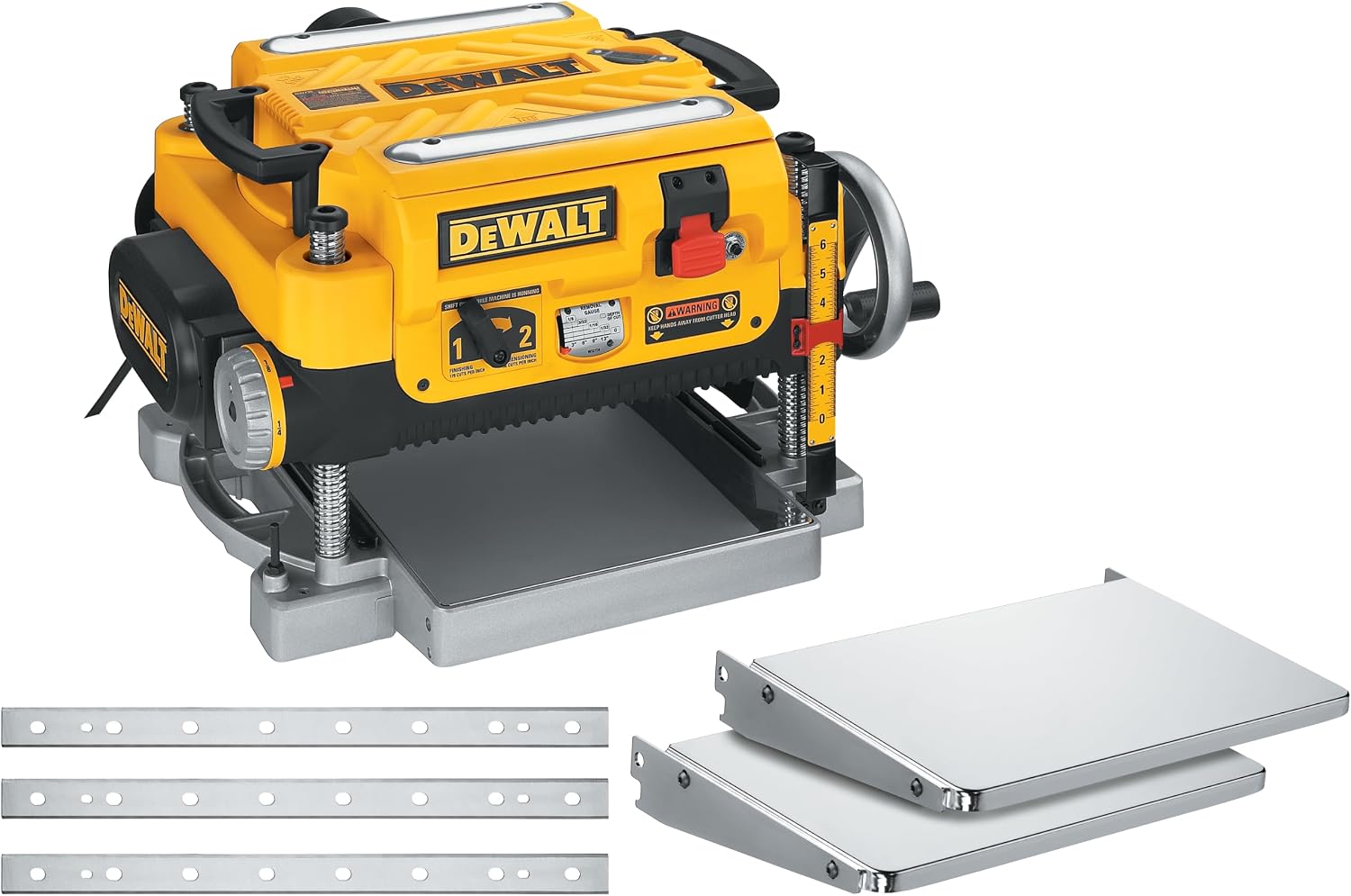
A thickness planer like the DEWALT DW735X is usually for someone who works with rough lumber and wants boards brought to a more consistent thickness without relying on a shop service. It may also suit a woodworker who has already moved past occasional projects and needs a tool that can handle regular stock prep, especially when the goal is to save time and get more control over the final dimension of a board.
The main reason to consider this model is its role in the shop workflow. A planer does not replace a jointer, a saw, or good lumber selection, but it can make rough boards easier to use by helping them reach a uniform thickness. That matters if you build furniture, cabinets, shelving, or trim pieces where matching stock is part of the job. A unit in this class is also worth comparing if you want something that feels more substantial than a light-duty benchtop tool and you plan to use it often enough that setup and repeatability start to matter.
One thing to verify before buying is how it fits your space and your dust collection setup. Thickness planers can take up more room than people expect once you account for infeed and outfeed space, board support, and chip removal. It is also worth checking the stock removal limits, cutterhead design, noise level, and whether the motor and feed rate match the kind of work you plan to do. Those details matter more than the label on the housing.
The evidence here is limited to the product listing and the category itself, so this draft stays with fit rather than pretending to verify performance. That is the safer way to approach a tool page when there are no ownership notes to draw from. Readers should treat the title as a starting point and confirm the specifications that affect real use, especially if the planer will live in a small garage, shared workshop, or a space where dust control is already a concern.
If you are building or refurbishing projects from rough boards and want a planer that sits in the heavier-duty end of the benchtop range, this may be a sensible option to research further. If your work is occasional and your material already comes close to final thickness, a planer like this may be more machine than you need. The best fit is the woodworker who wants dependable stock prep to be part of the routine, not something handled one board at a time with extra sanding later.
Amazon product links on this guide are not currently affiliate links. Neither woodworkin 98 nor Buyer Field Guide earns an affiliate commission from them.
See current price